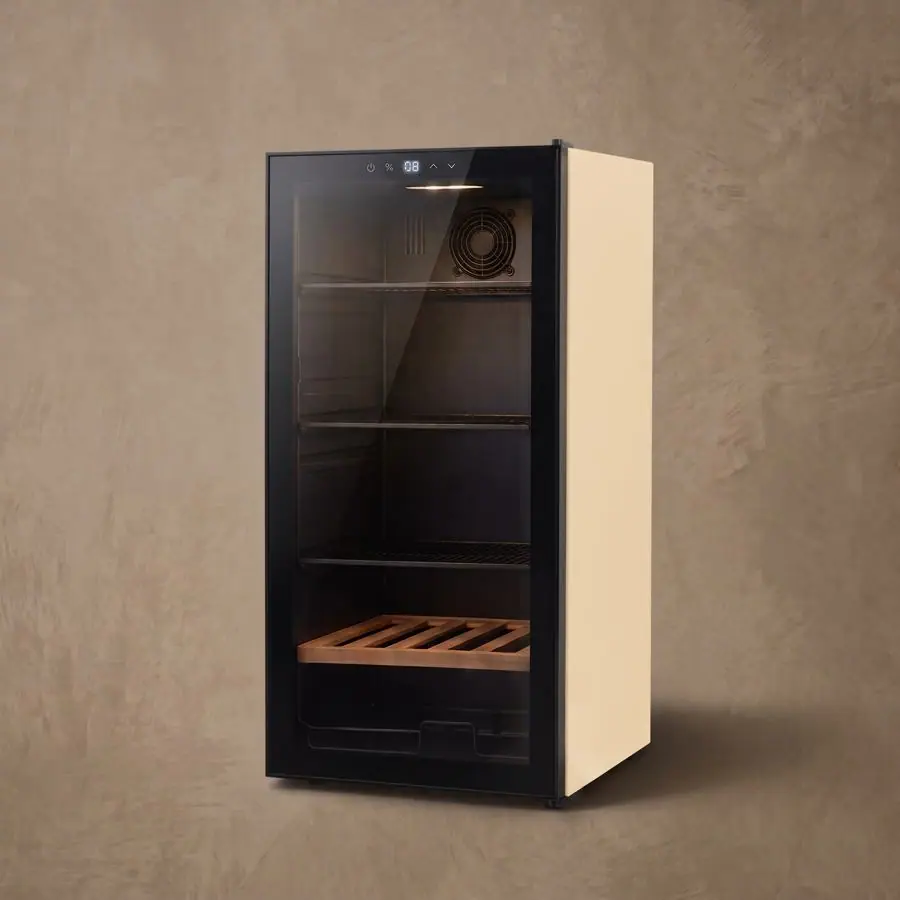
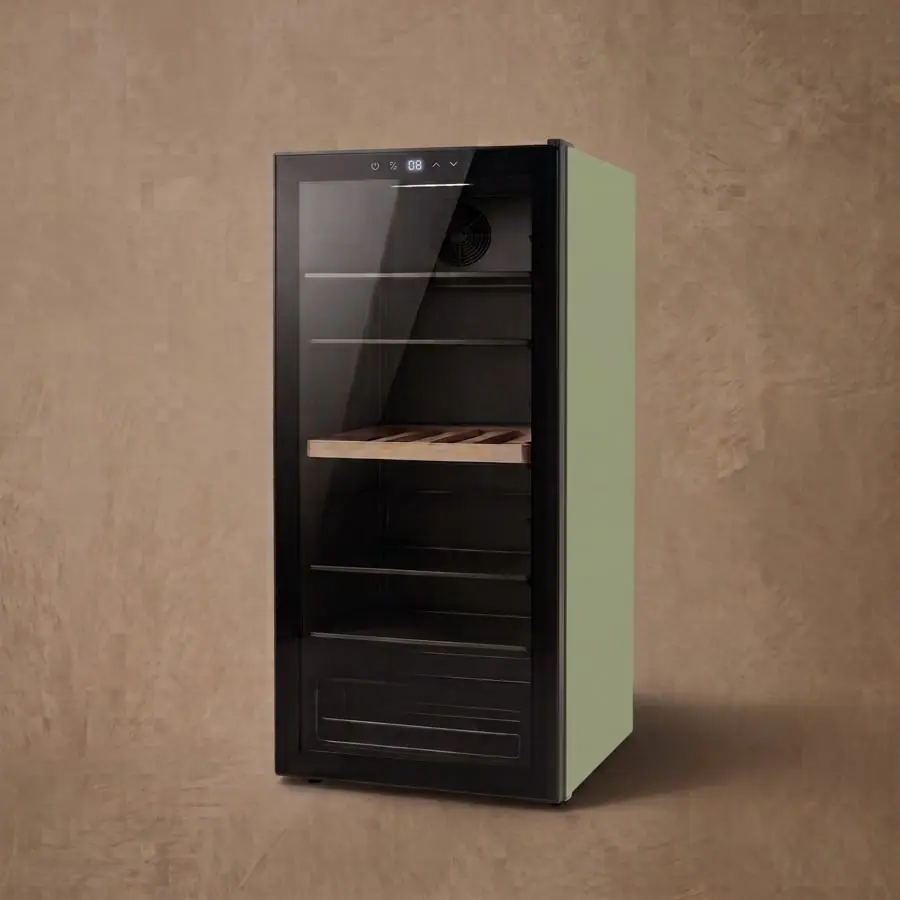
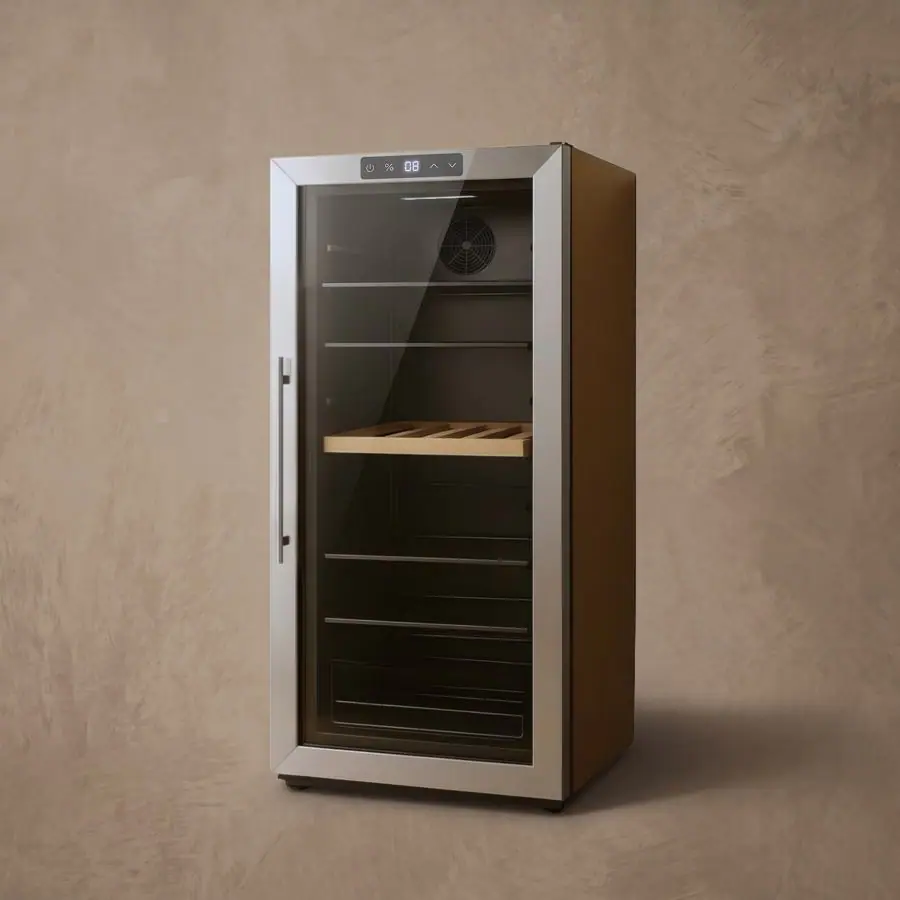
In Singapore's humidity, a cold glass door sweats — water beading, running down the front, pooling on the floor, and a cloth living beside the cabinet. MoistGuard™ keeps the glass warm enough that it never gets that far, even at 5°C.
Singapore air sits around 80% humidity. When warm, wet room air touches a pane chilled to near 5°C, it hits its dew point and the moisture condenses out — on the outside of your door. Every glass cooler does this. The only question is whether the glass is doing anything about it.
Adding panes slows heat transfer down. It never stops condensation, because the outer surface still ends up below the dew point. Only heat does.
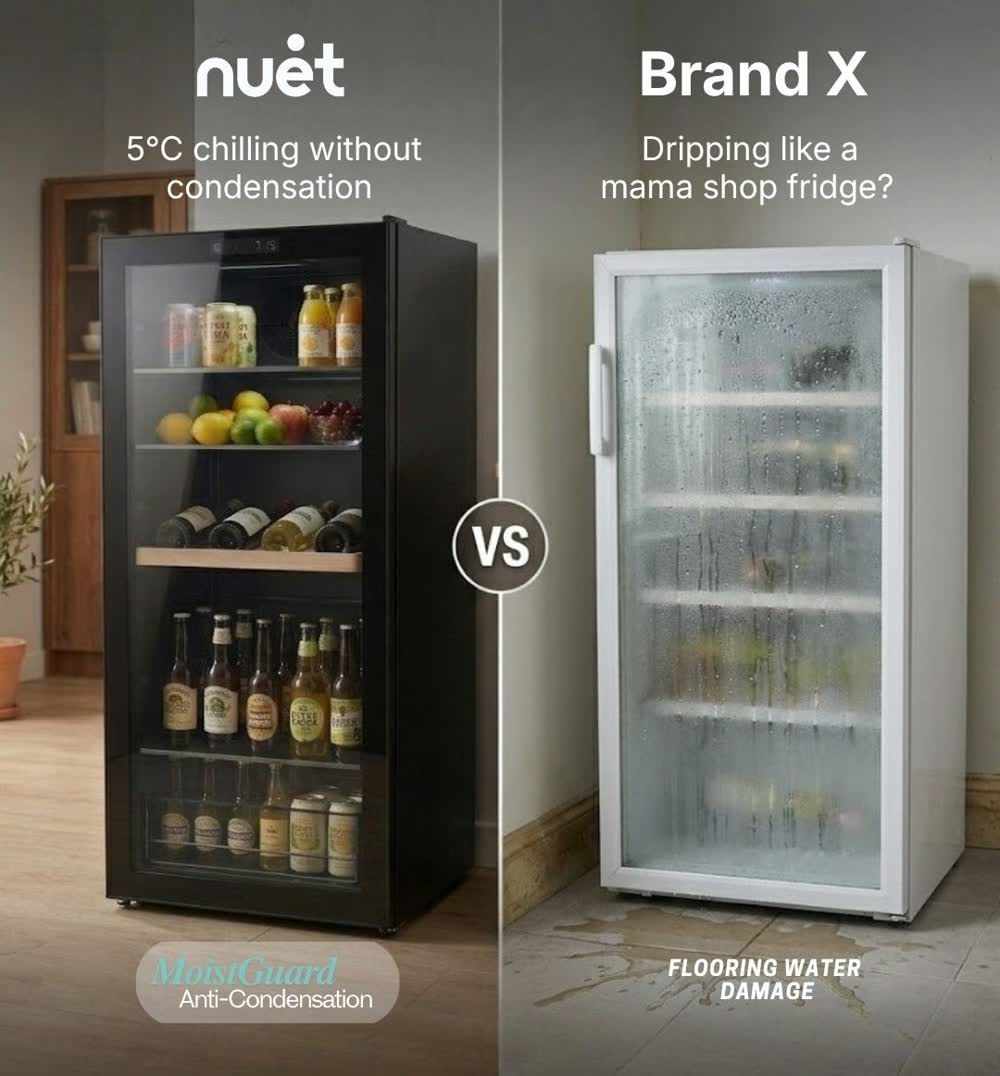
Extra layers reduce heat transfer but can't stop condensation at low temps.
Reflective Low-E coating reduces UV/IR transmission — still beads up.
Subtle heat keeps the pane near the dew point. Air-gap insulation slows heat transfer.
Premium heated glass at an affordable price — in a multipurpose cooler that chills everything from soft drinks to wine, not wine alone.
No. The element draws very little power — the whole cabinet runs at roughly S$3.40–S$3.80 a month in total, heating included. It's cheaper than the water damage and daily wiping a sweating door creates.
Barely. It's held near the room's dew point — enough to stop moisture collecting and running, not enough to feel hot. Think of a rear windscreen demister, not a heater.
That's exactly what the dual-pane air gap is for. The sealed cavity separates the heated outer pane from the cold interior, so the two don't work against each other. Cooling stays efficient while the front stays dry.